The kitchen has always been the heart of the home, but in 2026 it is becoming the smartest room in the house. A new generation of AI-powered kitchen technology is moving beyond simple timers and recipe apps to fundamentally change how you plan meals, prep ingredients, and cook food.
Whether you are a seasoned home cook looking to level up or someone who struggles to get dinner on the table consistently, smart kitchen tech is making the process easier, more efficient, and more enjoyable. Here is what is actually useful and worth your attention.
The Shift From Smart Appliances to Intelligent Cooking Systems
Earlier generations of smart kitchen products were often gimmicks — a Wi-Fi-connected toaster that sent notifications or a refrigerator with a touchscreen you never used. The 2026 generation is fundamentally different because the underlying AI has matured enough to be genuinely helpful.
Modern smart kitchen systems can now:
- Identify what you are cooking using built-in cameras and sensors, then automatically adjust temperature, time, and cooking mode
- Guide you through recipes step by step with real-time feedback based on what the sensors detect — not just a static list of instructions
- Learn your preferences over time and suggest adjustments to recipes based on how you like your food prepared
- Coordinate multiple cooking tasks so everything finishes at the same time, which is one of the hardest skills for home cooks to master
The key difference is context awareness. These systems understand what is happening in your kitchen in real time and respond accordingly.
Smart Ovens: The Most Impactful Upgrade
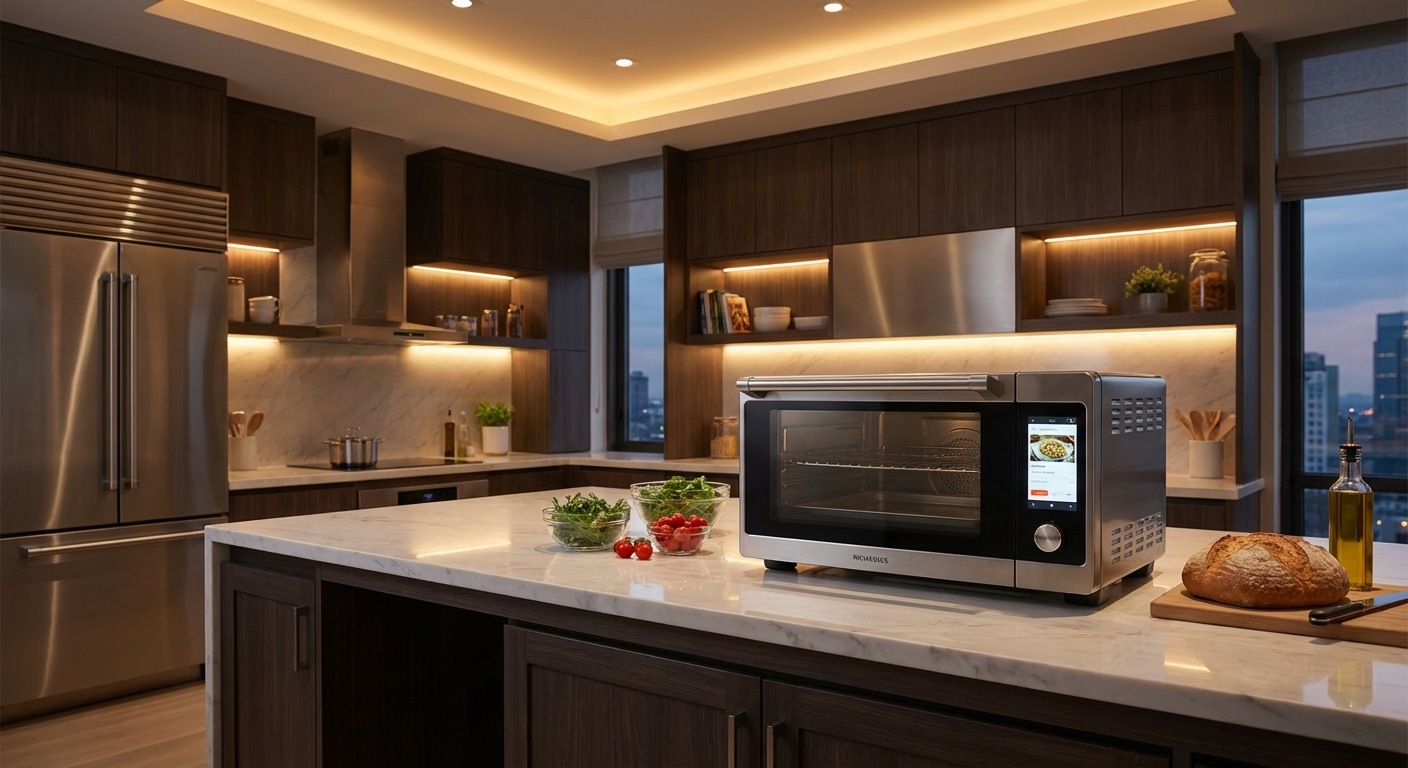
If you are going to invest in one piece of smart kitchen technology, a smart countertop oven is the strongest starting point. The latest models combine multiple cooking methods — convection, steam, air frying, broiling — with AI-powered food recognition.
Here is how a typical cooking session works with a modern smart oven:
- You place your food inside and close the door
- An internal camera identifies what you are cooking — whether it is a piece of salmon, a frozen pizza, or roasted vegetables
- The oven selects the optimal cooking method and temperature combination
- Throughout cooking, sensors monitor internal temperature, moisture levels, and browning
- The oven adjusts in real time, adding steam for moisture or increasing heat for a better crust
- You get notified when the food reaches your preferred doneness level
The result is consistently better food with almost no guesswork. Overcooking chicken breasts or burning the bottom of a casserole becomes much harder when sensors are monitoring the entire process.
What to look for in a smart oven:
- Multiple cooking elements — Steam plus convection is the most versatile combination
- Internal food probe — Essential for meats and ensures accurate doneness monitoring
- Automatic food recognition — Eliminates manual program selection for common foods
- Over-the-air updates — The oven improves over time as the AI model is refined
- Manual override — Always choose a model that lets you take full control when you want to
AI-Powered Meal Planning
Beyond the actual cooking hardware, AI meal planning tools have become remarkably practical in 2026. These systems address what many home cooks find hardest — not the cooking itself, but deciding what to make.
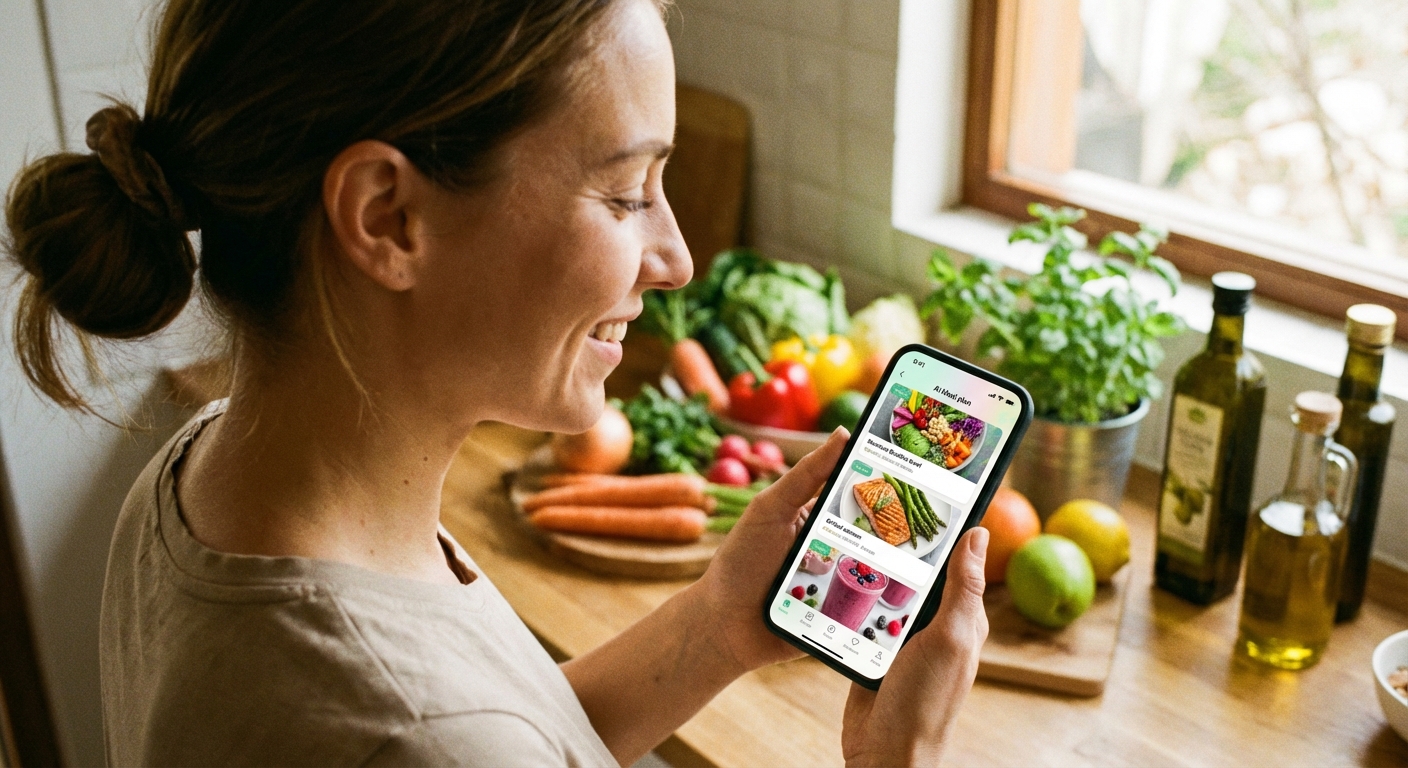
Modern meal planning AI can:
- Scan your refrigerator and pantry (via connected cameras or manual input) to suggest recipes based on what you already have
- Account for dietary restrictions and preferences across your entire household — one person is vegetarian, another avoids gluten, a child will not eat anything green
- Optimize for nutrition by ensuring your weekly meal plan hits balanced macronutrient and micronutrient targets
- Minimize food waste by suggesting recipes that use up ingredients before they expire
- Generate shopping lists that are organized by store section and account for what you already have
The food waste reduction alone makes these tools worthwhile. The average household throws away 30 to 40 percent of the food it buys. Smart meal planning that uses what you have before it spoils can meaningfully reduce both waste and grocery spending.
Smart Scales and Precision Cooking
Precision matters more than most home cooks realize. Professional bakers have always known this — measuring flour by weight instead of volume can be the difference between a perfect loaf and a dense brick.
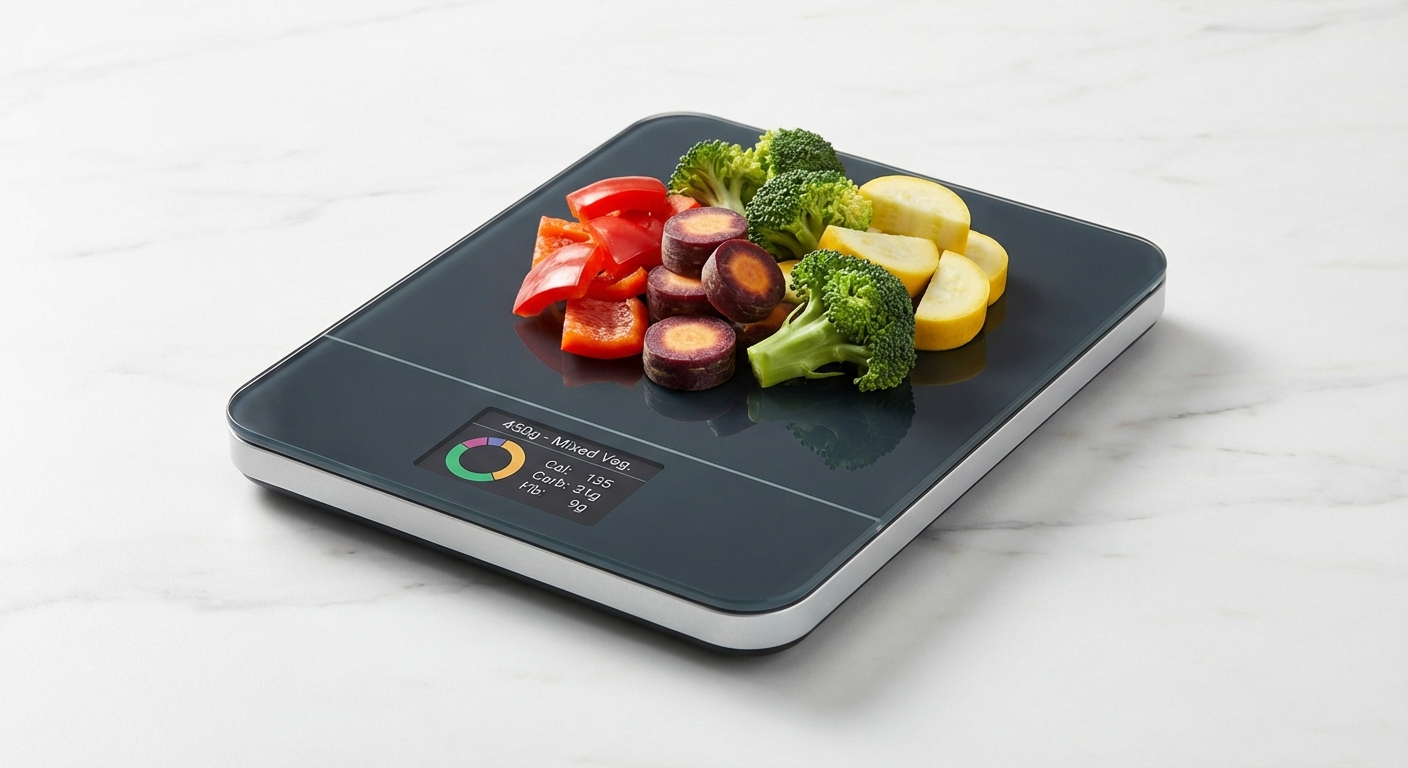
Smart kitchen scales in 2026 go far beyond simple weighing:
- Nutritional tracking — Place any ingredient on the scale and it calculates calories, protein, carbohydrates, fat, and micronutrients in real time
- Recipe scaling — Tell the scale you want to make a recipe for six instead of four, and it recalculates every ingredient as you add them to the bowl
- Step-by-step guidance — The scale walks you through recipes ingredient by ingredient, confirming the right amount before you move to the next step
- Portion control — For those managing their food intake, smart scales make accurate portioning effortless
For anyone trying to eat healthier without obsessively counting calories, a smart scale that automatically logs nutritional information is genuinely transformative.
Connected Cooking Surfaces
Smart stovetops and induction cooktops represent another area of meaningful innovation. The latest induction surfaces feature zone-free cooking — place a pot or pan anywhere on the surface, and it detects the cookware and heats only that specific area.
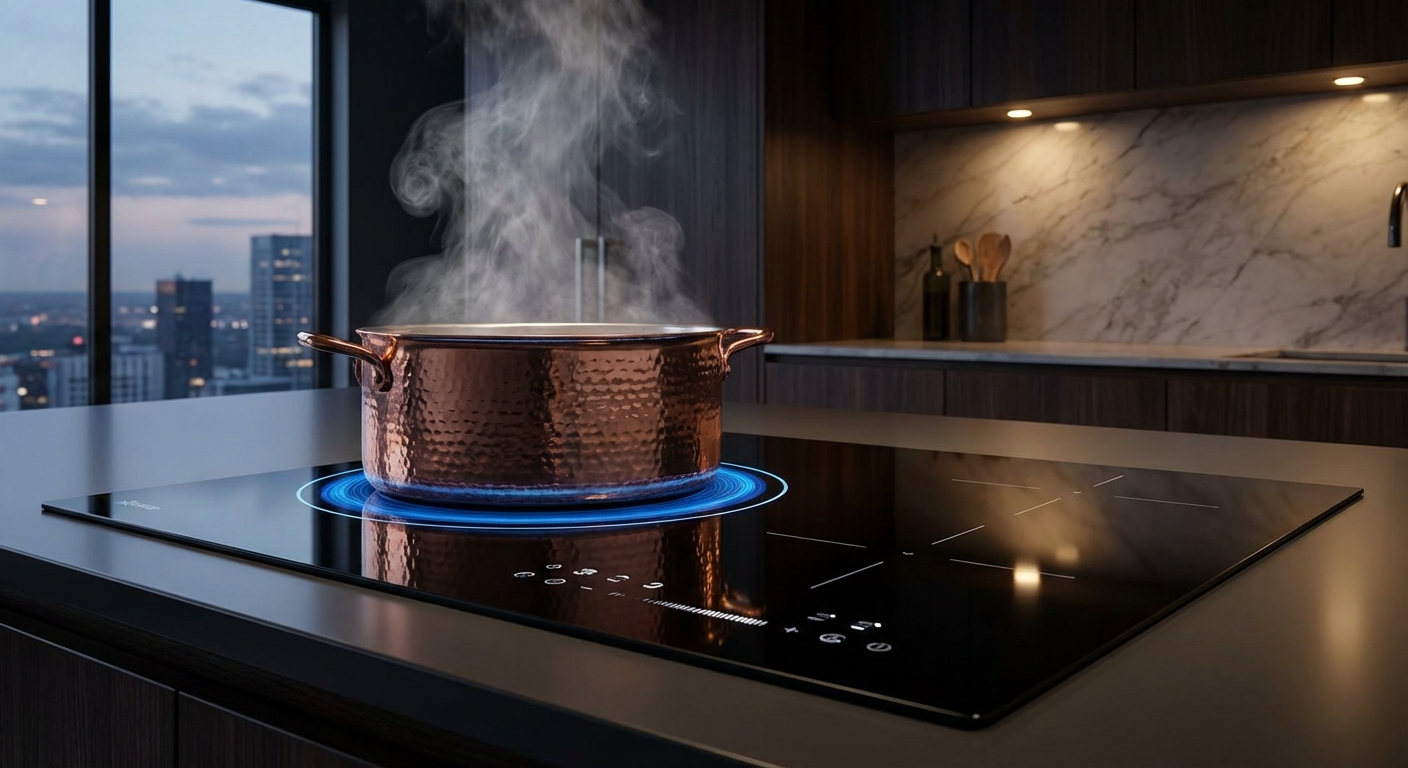
Advanced features now available:
- Temperature precision — Hold exact temperatures for techniques like tempering chocolate or making delicate sauces, with accuracy within one or two degrees
- Pan detection and auto-sizing — The heating zone automatically matches the size of your cookware, wasting no energy
- Integrated timers per zone — Each cooking zone has its own timer, and the surface can alert you when it is time to stir, flip, or remove food
- Safety shutoff — Automatic shutoff if a pan is removed or if the surface detects no activity for a set period
- Ventilation integration — Smart cooktops can communicate with your range hood to automatically adjust fan speed based on what you are cooking
Induction technology also offers a safety advantage for families with young children — the surface itself stays cool, with heat generated only in the cookware.
Food Storage and Freshness Monitoring
Smart food storage is an underappreciated category that addresses a universal kitchen problem: forgetting what you have and letting food go to waste.
The latest systems use a combination of approaches:
- Camera-equipped refrigerators that let you check contents remotely from the grocery store
- Freshness sensors that monitor ethylene gas levels and humidity to predict when produce will spoil
- Smart containers with built-in sensors that track how long leftovers have been stored and alert you before they go bad
- Inventory management that integrates with meal planning AI — when your tomatoes are about to turn, the system suggests recipes that use them
These tools are especially useful for households that buy groceries in bulk or meal prep on weekends. Knowing exactly what you have and when it needs to be used eliminates the all-too-common experience of discovering forgotten produce in the back of the fridge.
Getting Started Without Overspending
Smart kitchen technology can get expensive quickly, but you do not need to overhaul everything at once. A practical approach:
Start here (highest impact per dollar):
- A smart kitchen scale with nutritional tracking — relatively affordable and immediately useful
- A meal planning app with AI features — many are subscription-based but low cost
- Smart food storage containers for items you frequently waste
Upgrade next:
- A smart countertop oven with food recognition — the single biggest cooking improvement for most people
- An induction cooktop if you are already considering replacing your stovetop
Full integration:
- Connected refrigerator with internal cameras and freshness monitoring
- Integrated meal planning that connects to your appliances and grocery delivery
The key is to start with the pain point that bothers you most. If you waste food, start with storage and planning. If you struggle with cooking consistency, start with a smart oven. If nutrition tracking is your goal, start with a smart scale.
The Future of the Connected Kitchen
The trajectory is clear — kitchens in the near future will function as integrated systems where appliances communicate with each other. Your meal plan tells your oven what you are making tonight, your refrigerator confirms you have the ingredients, and your cooktop pre-heats to the right temperature as you start prepping.
We are not fully there yet in 2026, but the building blocks are in place. The Matter smart home standard is enabling cross-brand communication, and the AI models powering food recognition and cooking optimization are improving with every software update.
The best smart kitchen tech in 2026 does not try to replace the cook — it eliminates the tedious parts (deciding what to make, worrying about timing, tracking nutrition) so you can focus on the parts of cooking that are actually enjoyable.