Clean water is the single most important thing you need in the backcountry. You can go days without food, but dehydration and waterborne illness can turn a dream trip into a medical emergency faster than almost anything else on the trail.
The water filtration market has exploded with options in 2026, from ultralight squeeze filters to gravity-fed systems and UV purifiers. Choosing the right one depends on your trip style, group size, and the conditions you expect to encounter. Here is a comprehensive breakdown of every method and when to use each one.
Why You Cannot Just Drink From the Stream
Even the clearest, most pristine-looking mountain stream can harbor invisible threats. The most common waterborne pathogens in backcountry water sources include:
- Protozoa like Giardia and Cryptosporidium — These cause severe gastrointestinal illness that can last weeks. They are found in virtually every natural water source in North America
- Bacteria including E. coli, Salmonella, and Campylobacter — Present wherever animal or human waste has contaminated water, which is more common than you would think even in remote areas
- Viruses like Norovirus and Hepatitis A — Less common in remote backcountry but a concern in areas with heavy human traffic or international travel
- Sediment and particulates — Not dangerous on their own, but they make water unpleasant to drink and can reduce the effectiveness of some treatment methods
Different treatment methods handle different threats. Understanding what you need to protect against helps you choose the right system.
Filtration Methods Compared
Squeeze Filters
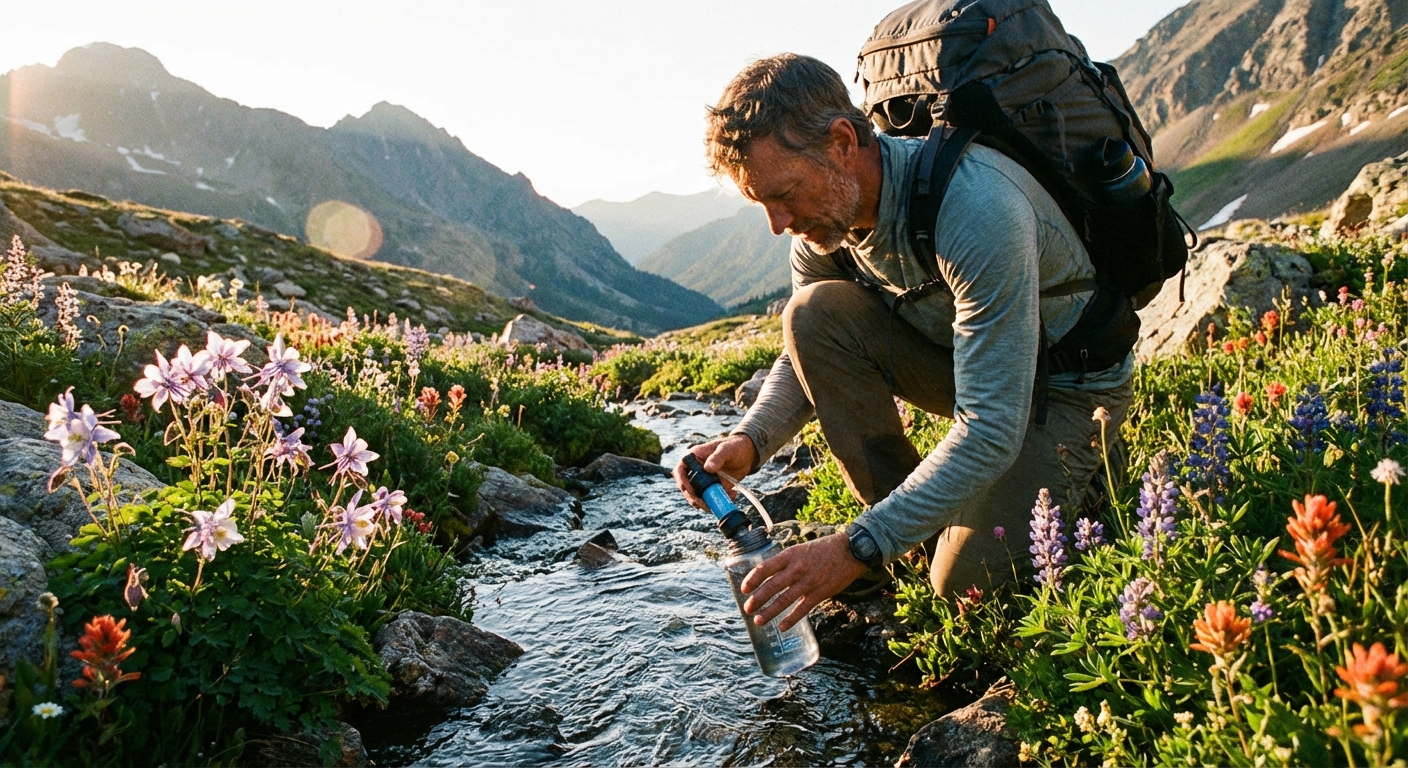
Squeeze filters are the most popular choice for solo hikers and couples. You fill a soft bottle or pouch with water, screw on the filter, and squeeze clean water into your drinking container.
Best for: Solo hikers, day hikes, ultralight backpackers, and anyone who values speed and simplicity
Advantages:
- Extremely lightweight — most weigh under 3 ounces
- No setup time — fill, squeeze, drink
- Long filter life — many last for thousands of liters
- Affordable initial cost
Limitations:
- Requires physical effort to squeeze, which can be tiring when filtering large volumes
- Flow rate slows as the filter ages (backflushing helps restore it)
- Most do not remove viruses — fine for most North American backcountry but not for international travel
- Freezing can permanently damage the filter element
Pro tip: Always carry the filter inside your sleeping bag in cold weather to prevent the water inside the filter element from freezing and cracking it.
Gravity Filters
Gravity filters use a bag of dirty water hung above a clean container. Gravity pulls the water through a filter element via a hose — no pumping or squeezing required.
Best for: Groups of three or more, base camps, and anyone who wants hands-free water processing
Advantages:
- Completely hands-free operation — hang it and walk away
- Excellent for filtering large volumes of water
- Easy to use when you are tired or cold
- Good flow rates — most process one to two liters per minute
Limitations:
- Heavier and bulkier than squeeze filters — typically 10 to 12 ounces
- Requires something to hang from (tree branch, trekking pole setup)
- More components mean more things that can fail
- Takes a few minutes of setup time
Pro tip: Fill the dirty water bag at the source and carry it back to camp. This saves multiple trips and lets you filter water comfortably at your campsite.
Pump Filters
Pump filters use a hand-operated pump to force water through a filter element. Once the dominant backcountry filtration method, they have been largely replaced by squeeze and gravity systems but still have their place.
Best for: Shallow water sources, winter conditions, and situations where water sources are hard to access
Advantages:
- Can draw water from shallow puddles, seeps, and sources where you cannot submerge a bag
- Reliable in cold weather — less susceptible to freezing issues than squeeze filters
- Consistent flow rate regardless of filter age
Limitations:
- Heavier than other options — most weigh 10 to 16 ounces
- Requires physical effort to pump
- More mechanical parts that can break
- Generally more expensive than squeeze or gravity options
UV Purifiers
UV purifiers use ultraviolet light to neutralize pathogens by disrupting their DNA. You stir the UV light in your water bottle for 60 to 90 seconds, and everything — including viruses — is neutralized.
Best for: International travel, areas with virus concerns, and as a backup to physical filtration
Advantages:
- Kills viruses, which most filters cannot
- Extremely fast — under two minutes per liter
- No filter to clog or replace
- Lightweight
Limitations:
- Requires batteries or USB charging — a dead battery means no water treatment
- Does not remove sediment or improve taste — murky water stays murky
- Less effective in turbid water — particles can shield pathogens from UV light
- No physical barrier means no removal of chemical contaminants
Pro tip: Pair a UV purifier with a simple pre-filter or bandana to remove sediment first. This combination gives you virus protection with clear water.
Chemical Treatment
Chemical treatment uses chlorine dioxide drops or tablets to kill pathogens. Lightweight, simple, and effective — but slow.
Best for: Emergency backup, ultralight purists, and situations where every gram matters
Advantages:
- Nearly weightless — a small bottle treats hundreds of liters
- No mechanical parts to break
- Kills viruses as well as bacteria and protozoa
- Extremely long shelf life
Limitations:
- Slow — standard treatment takes 30 minutes, and Cryptosporidium requires four hours
- Affects taste — treated water has a slight chemical flavor
- Less effective in cold or murky water
- Requires planning ahead — you cannot drink immediately
Choosing Your System: A Decision Framework
Asking yourself these questions will narrow down the best option:
How many people are in your group?
- Solo or pair: squeeze filter
- Three or more: gravity filter
- Large base camp: gravity filter with high-capacity bags
Where are you traveling?
- North American backcountry: any filter method works
- International or developing regions: choose a method that also handles viruses (UV, chemical, or filter rated for viruses)
- Winter conditions: pump filter or chemical treatment (freezing can damage squeeze and gravity filters)
How important is weight?
- Ultralight priority: squeeze filter or chemical treatment
- Moderate weight tolerance: gravity filter
- Weight is not a concern: pump filter for reliability
What are your water sources like?
- Clear mountain streams: any method works well
- Murky or sediment-heavy: physical filter first, then UV or chemical if needed
- Shallow seeps or puddles: pump filter excels here
Hydration Strategy Beyond Filtration
Having the right filter is only part of staying properly hydrated in the backcountry:
- Drink before you are thirsty — By the time you feel thirst, you are already mildly dehydrated. Take small sips frequently rather than large drinks occasionally
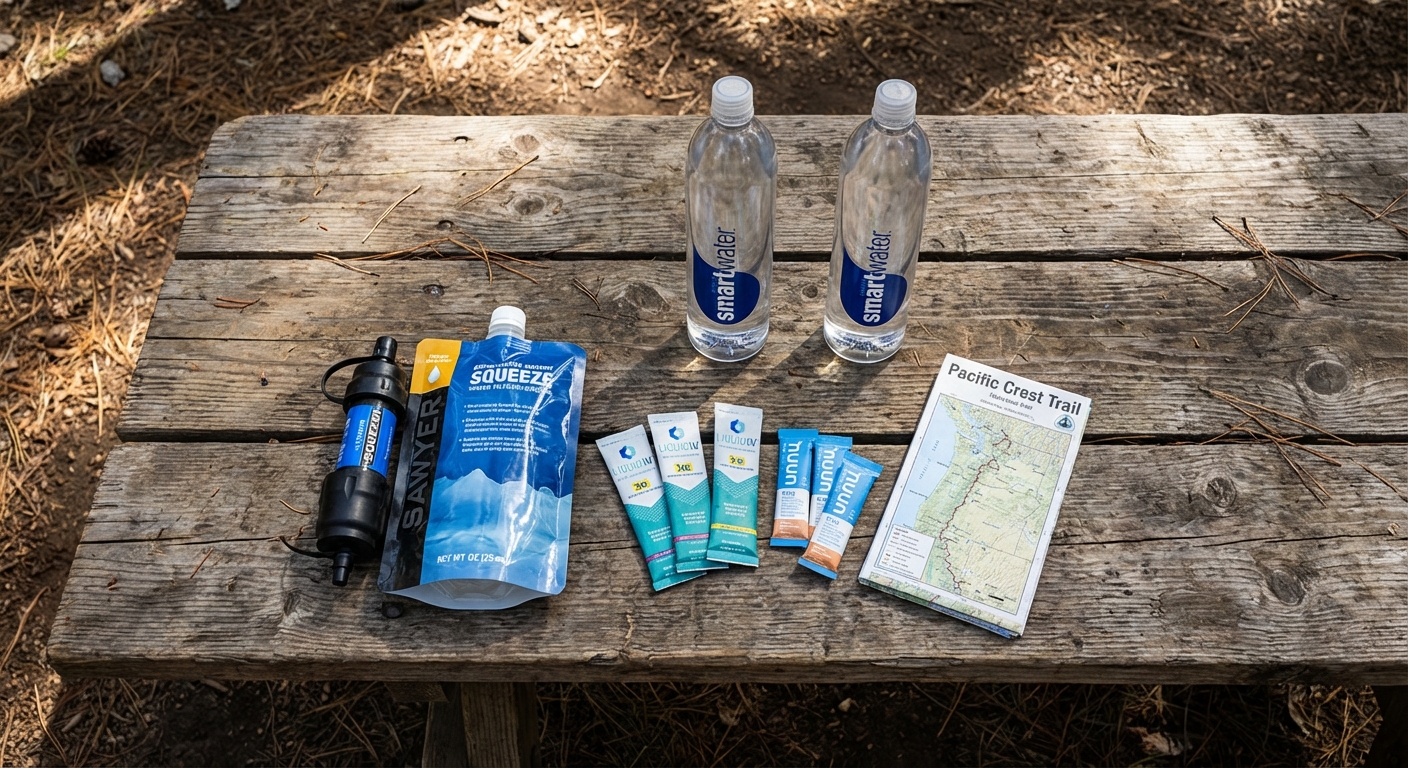
- Know your water sources — Study your map and plan your route around reliable water sources. On dry stretches, carry more water even though it is heavy
- Electrolyte replacement — Plain water is not enough during heavy exertion. Carry electrolyte powder or tablets to maintain sodium, potassium, and magnesium levels
- Pre-hydrate before the trail — Drink plenty of water in the hours before starting your hike. Starting well-hydrated means you need to carry less water initially
- Monitor your output — Clear to pale yellow urine means you are well hydrated. Dark yellow is a warning sign to drink more immediately
Maintenance and Longevity
Every filtration system needs basic maintenance to perform reliably:
- Backflush squeeze and gravity filters after every trip, or whenever flow rate noticeably decreases
- Dry filters completely before storing for extended periods to prevent mold growth
- Inspect hoses and gaskets before each trip — small cracks or loose connections compromise the entire system
- Carry a backup method on any trip longer than a weekend. A small bottle of chemical treatment weighs almost nothing and could save your trip if your primary filter fails
- Track your filter's lifespan — Most have a rated capacity. Replace the element before it reaches the end of its life, not after
Clean water is non-negotiable in the backcountry. Investing in the right system and knowing how to use it properly transforms water from a constant worry into a simple, solved problem — so you can focus on enjoying the trail.